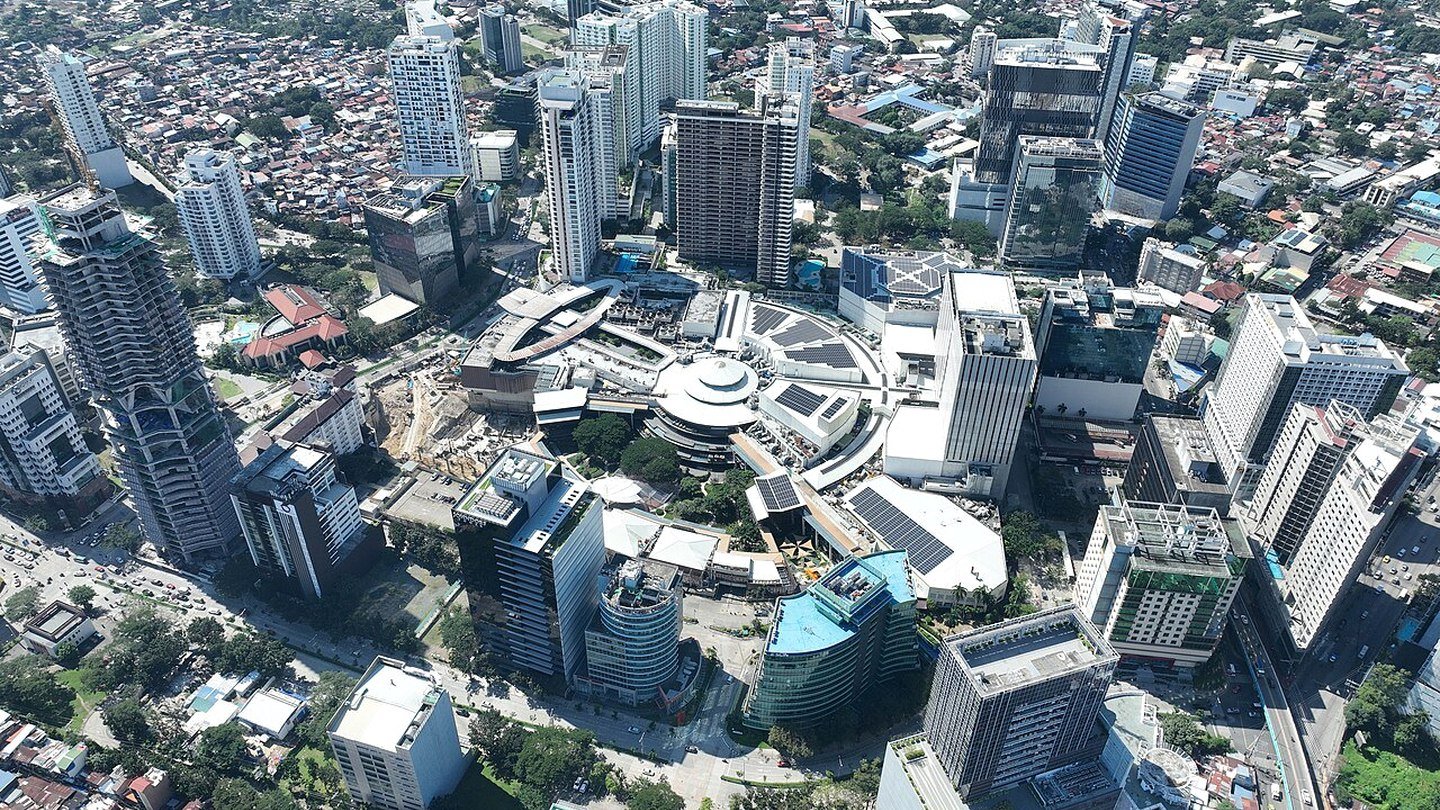
Cebu remains a credible real-estate market in 2026, but the opportunity is increasingly property-specific. Central Visayas still has a large diversified economy, real-estate activity continued to expand in 2025, employment remains substantial, and major developers continue committing capital to Cebu. At the same time, a large VisMin condominium pipeline means buyers should expect more competition between projects and future units. The practical strategy is to compare location, total price, unit efficiency, demand anchors and payment structure rather than buy simply because a project is in Cebu.
- Central Visayas GDP reached about ₱1.32 trillion in 2025 and grew 3.7% year on year.
- Real estate and ownership of dwellings grew 4.8% in the region in 2025.
- Central Visayas recorded roughly 2.93 million employed persons and a 96.2% employment rate in 2025.
- Colliers expects around 45,000 condominium units across VisMin from 2026 to 2029, led by Cebu and Davao.
- Major national and Cebu-based developers continue expanding in Cebu, increasing both market confidence and buyer choice.
- More supply makes price discipline, product differentiation and end-user demand more important—not less.
The 2026 Cebu outlook in one sentence
Cebu has meaningful long-term demand drivers, but 2026 is a market where the quality of the individual purchase matters more than the general growth narrative.
Dated market facts buyers should know
At constant 2018 prices, with 3.7% annual growth.
2025 growth of the regional real-estate and ownership-of-dwellings industry.
Approximate Central Visayas employment level in 2025.
Expected 2026–2029 completions across VisMin, led by Cebu and Davao.
1. Cebu's economic base remains substantial—but growth has moderated
The Philippine Statistics Authority reported on April 23, 2026 that the Central Visayas economy expanded by 3.7% in 2025 to approximately ₱1.32 trillion at constant 2018 prices. That was slower than the 7.4% growth recorded in 2024.
The slowdown is important because it argues against treating Cebu property as a one-way market. Yet the composition of growth is also relevant: real estate and ownership of dwellings grew 4.8% and contributed to regional expansion.
Source: Philippine Statistics Authority Central Visayas — 2025 regional economic performance.

2. Employment provides a real demand anchor
Property demand becomes more defensible when it is tied to people who already live and work in the market. PSA estimated the Central Visayas employment rate at 96.2% in 2025, representing approximately 2.93 million employed persons.
Within Cebu's major urban areas, Mandaue City posted a 97.2% employment rate, Cebu City 95.5%, and Lapu-Lapu City 94.7% in the preliminary 2025 results. These figures do not predict condominium rents, but they reinforce the value of established employment and service centers as property-demand anchors.
Source: PSA Central Visayas — 2025 employment report.
3. Residential supply is growing—and that changes the buying strategy
Colliers' July 3, 2026 VisMin report expects around 45,000 condominium units to be delivered across Visayas and Mindanao from 2026 to 2029, with Cebu and Davao leading the pipeline.
This is simultaneously a positive development signal and a competitive warning. More supply gives buyers more choice, but it also means future owners may compete with more units for resale and rental demand.
The correct question is therefore not “Is new supply good or bad?” It is: Will this specific property remain differentiated when competing units reach the market?
Source: Colliers — VisMin Report, July 2026.
4. Major developers are still committing capital to Cebu
Developer activity is another useful signal, although it should never replace unit-level due diligence.
Colliers reported in May 2026 that Ayala Land was accelerating work across three major Cebu estates: Seagrove in Lapu-Lapu, Gatewalk in Mandaue and South Coast City in Cebu City. In June, Colliers also highlighted DMCI Homes' first high-rise residential project in Cebu.
These investments support the view that Cebu remains strategically important to large property companies. They also increase competition, making project differentiation more important.
Sources: Colliers — Ayala Land expands Cebu footprint, May 22, 2026 and Colliers — DMCI enters Cebu high-rise market, June 12, 2026.
2026 signals: support versus caution
| Market signal | Supportive interpretation | What buyers should still test |
|---|---|---|
| Regional economy | Large, diversified Central Visayas economy | Growth slowed from 2024; do not assume every segment is equally strong |
| Real estate activity | Real estate and ownership of dwellings grew in 2025 | Industry growth does not guarantee an individual project's return |
| Employment | Large employed population supports housing and service demand | Demand varies sharply by micro-location and property type |
| New residential supply | More developer confidence and buyer choice | Future resale and rental competition |
| Major estates | Continued investment by established developers | Brand strength cannot compensate for an overpriced or inefficient unit |
| Financing environment | Multiple developer payment structures remain available | Actual borrowing cost and turnover balance must be modeled |
Which Cebu properties deserve closer attention in 2026?
Properties near established demand
Projects with practical access to employment centers, hospitals, universities, retail, transportation and mature neighborhoods begin with a stronger demand foundation than properties depending almost entirely on future announcements.
Properties with efficient units and defensible total prices
Compare usable space, layout, density and total contract price—not only the project brand or monthly equity figure.
Mixed-use and well-connected locations
Integrated communities can benefit from several forms of demand at once, while improving transport can strengthen already viable locations. See CEBOOM's location pages for geographic comparisons.
Properties with a clearly identifiable end user
Before buying, identify who is realistically expected to use the unit: a local professional, family, executive, student, leisure buyer, retiree or long-stay visitor. A property without a credible user profile deserves extra scrutiny.
What buyers should not conclude from the 2026 data
The evidence does not show that every Cebu condominium will appreciate, that infrastructure guarantees higher prices, or that a major developer name removes investment risk.
Likewise, a growing pipeline does not automatically mean buyers should avoid Cebu. More supply can create better choices and stronger negotiating comparisons. The critical issue is whether the specific property offers sufficient value and differentiation.
Cebu's 2026 investment case is increasingly about selection rather than speculation. The strongest purchases combine real demand, a defensible price, efficient product design and a location that works today—even before future infrastructure or appreciation is assumed.
How different buyers should interpret the market
Buy for durable fit
Prioritize daily convenience, affordability, space and long-term suitability.
Buy for demand
Test the likely tenant or resale market, competing supply and realistic ownership costs.
Buy for manageability
Focus on developer reliability, payment structure, future balance and property management.
Frequently asked questions
Is Cebu real estate still a good investment in 2026?
Cebu remains a serious property market because of its diversified economy, employment base, tourism, infrastructure and continued developer investment. However, individual project quality and acquisition price matter more than the Cebu label itself.
What is the biggest Cebu property risk in 2026?
One important risk is buying without accounting for future competing supply. New supply increases the importance of unit quality, location, pricing and a clearly defined buyer or tenant market.
Which Cebu properties deserve closer attention?
Properties with established demand anchors, practical accessibility, efficient units, defensible total prices and credible property management deserve closer evaluation.
Should I choose Cebu City, Mandaue or Mactan?
No single location is automatically best. Cebu City is strongly anchored by urban employment and services, Mandaue benefits from central Metro Cebu connectivity and mixed-use growth, while Mactan combines airport, tourism and leisure demand. The right location depends on your objective.
Official and institutional sources used
- Philippine Statistics Authority Central Visayas — Central Visayas' Economy Expands by 3.7 Percent in 2025
- Philippine Statistics Authority Central Visayas — Employment Rate in Central Visayas, 2025
- Colliers Philippines — VisMin Report, July 2026
- Colliers Philippines — Ayala Land expands Cebu footprint, May 2026
- Colliers Philippines — DMCI Homes enters Cebu high-rise market, June 2026
Turn the market outlook into a property-level comparison.
Use CEBOOM to compare Cebu properties by location, developer, type, unit configuration and verified price context. Then request the latest availability and computation for the units that actually fit your budget and purpose.